When Vital Infrastructure Depends on Overhead Cables
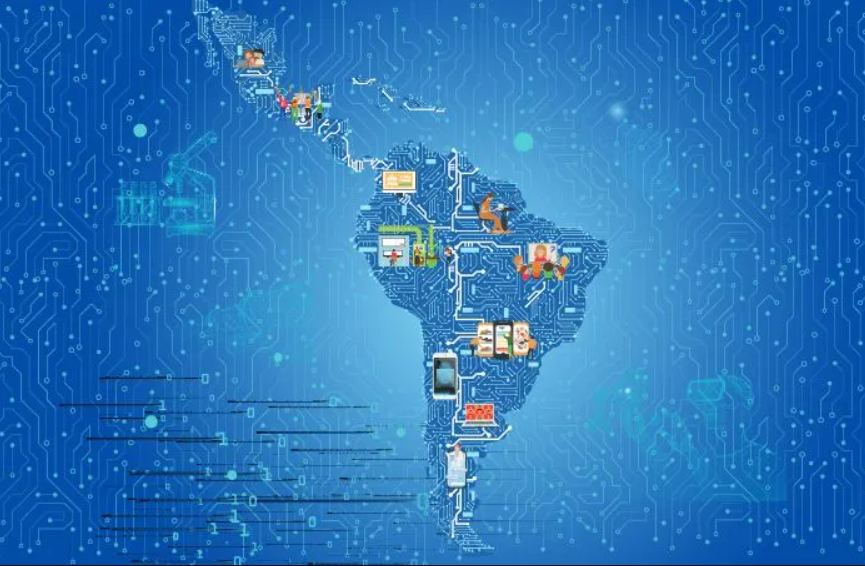
In many countries, especially across Latin America, the expansion of telecommunications followed the fastest and most financially palatable path: hanging fiber-optic cables on utility poles.
This choice to keep cables in the air meets the most basic economic instinct — reducing costs and accelerating coverage — but it also creates a structural contradiction that cannot be ignored.
The infrastructure that supports an entire system — banking operations, digital commerce, and much of modern productivity — is, quite literally, exposed to oversized trucks, summer storms, and the simple misfortune of a badly positioned tree branch.
Aerial fiber-optic networks have thrived because they are inexpensive, flexible, and relatively easy to install, and that is easy to understand. However, the price of that efficiency is ultimately paid in the form of physical fragility. Each pole offers the convenience of a ready-made route, but it also represents a vulnerable point in the connectivity chain.
Accidents, Weather, and Human Interference as Chronic Breakage Vectors
Living with instability has become so common that, in many cases, we no longer notice the structural absurdity it represents. Fiber-optic breaks are treated as isolated, almost natural events, when in fact they form a chronic pattern of fragility.
“In just the first half of 2025 the utility company responsible for power distribution in São Paulo recorded 349 accidents involving utility poles”.
This illustrates how fragile the situation is: in just the first half of 2025 the utility company responsible for power distribution in São Paulo recorded 349 accidents involving utility poles. This is not merely a case of “occasional interruptions,” as operators often claim; it is a system whose normal mode of operation involves living with frequent ruptures.
But the vulnerability is not limited to accidents or unpredictable weather. Part of it stems from everyday human activity — and not only from carelessness. Third-party construction work, sometimes performed without coordination or authorization, breaks buried cables or strains aerial structures to the point of failure.
In other cases, the problem is intentional: vandalism that compromises entire stretches of the network, leaving neighborhoods or entire cities in a state of digital blackout for hours.
What stands out, however, is not only the frequency of these incidents but the cultural acceptance that this is simply the operating condition of our modern connectivity — the direct consequence of choices made to cheapen and accelerate network expansion.
But the cost, ultimately, is debatable. When heavy rains in the Petrópolis region of Rio de Janeiro caused the failure of 60% of the optical-cable infrastructure in 2022, research and education institutions were left without internet access for several days.
This is proof that in a society that calls itself “critical” and “digital,” precariousness appears, paradoxically, to be an integral part of the model.
Redundancy: The Mechanism That Sustains Stability
Why We Rely on Systems That Stand Only Because of a Plan B
Faced with this challenge, redundancy emerges not as a luxury, but as a vital survival mechanism. Yet relying on redundancy is, in itself, an acknowledgment that the primary system is not reliable enough to operate on its own. We create a plan B because we know — with uncomfortable clarity — that plan A will fail, and not occasionally, but predictably.
The logic behind redundancy is based on the principle of duplication: alternative paths for data traffic, replicated equipment, distinct routes that do not share the same physical vulnerability. In its simplest definition, it means creating parallel structures capable of taking over when the inevitable happens.
In practice, when a storm knocks down a tree, when a truck tears down the fiber line, when construction work accidentally breaks a buried cable — the network must have another route ready to take over the flow without hesitation.
This “high availability,” as it is described in the industry, is less a technological virtue and more an engineering philosophy: the principle that in critical systems, failure cannot be equivalent to interruption.
It requires an architecture capable of reorganizing itself in milliseconds, automatically rerouting traffic, reconfiguring pathways, producing continuity out of chaos — a kind of choreography that maintains the illusion of stability even when the physical fabric of the network is torn.
Yet there is a somewhat tragically ironic element in this dependence on redundancy. It is, therefore, both a solution and a symptom — proof of technical ingenuity, but also of the inherent fragility of the infrastructure it seeks to compensate for.
From Vulnerability to Resilience: How Real Redundancy Is Built
If fragility is embedded in the very physicality of networks, resilience must be constructed as an additional layer — a kind of invisible counterweight to constant risk.
Redundancy, in this sense, is not merely a technical solution; it is a way of thinking about the system as something destined to fail and therefore obligated to reassemble itself. What is at stake is not the elimination of vulnerability, but the ability to respond to it swiftly enough that the user never notices.
The functioning of this mechanism depends on an architecture that allows traffic to migrate instantly from one path to another. When a primary link is broken, an automatic switching system must activate, redirecting data to the backup route without perceptible interruption.
In theory, this switchover occurs in milliseconds; in practice, it represents the difference between an infrastructure that absorbs the impact and one that collapses at the first hit.
This is the logic behind the so-called redundancy routes described in “redundant fiber path” solutions — parallel paths that take over when the main route becomes unavailable.
This is what resilience is in essence: the capacity for self-preservation. It is a concept that now sits at the center of the discussion around critical infrastructure — not the supremacy of technology, but its ability to withstand inevitable failures.
Distinct Routes, Complementary Technologies, and Recovery Topologies
Resilience does not arise spontaneously; it is built through deliberate decisions, such as designing links with physically distinct routes so that a single incident — the fall of a utility pole, or a break caused by third-party construction — does not simultaneously compromise every available path.
Physical separation of routes, therefore, is not an architectural detail: it is the difference between a system that remains continuous and one that is vulnerable to collapse.
However, building real redundancy requires more than duplicating cables. It involves distributing dependence across complementary technologies, creating layers that mitigate different risks.
A provider may combine fiber optic as the primary medium with a 4G or 5G connection as an alternative route, reducing the likelihood of simultaneous failures. It may also replicate critical equipment — routers, switches, optical modules — to ensure that interruptions do not originate from a single point whose failure jeopardizes the entire network.
Similarly, a ring topology creates multiple paths between points of presence (PoPs), allowing traffic to “circulate” through the circuit in reverse if one of the connections is broken.
These choices form a kind of engineering of trust. It is no longer about believing that the infrastructure will remain intact, but about understanding that it does not need to remain intact in order to keep functioning.
By contracting multiple links from different carriers, avoiding physical convergence of routes, and incorporating heterogeneous technologies, ISPs build networks that acknowledge their own fragility — and respond to it with multiplicity and redundancy.
The promise of continuity does not come from the strength of the structure, but from its ability to recompose itself continuously.
Resilience, in this sense, is less a property of the network and more a reflection of the awareness we have gained about the digital world we have built: a world where failure is part of the operating model, and where the backup, the ring, and duplication have ceased to be precautions and have become the remedy of modern connectivity.
Conclusion: Redundancy as a Structural Necessity of the Digital Economy
In the end, redundancy ceases to be a technical attribute reserved for network engineers and becomes a central component of the very viability of digital access — from major urban hubs to regions as remote as the Amazon or the Atacama.
In any country where supply chains, public services, and financial markets depend on continuous connectivity, the ability of an infrastructure to absorb failures without collapsing is less a competitive advantage and more a structural necessity — not only for operators, but for any economy that aims to remain functional without unnecessary disruptions.
Ignoring this fact does not reduce costs; it merely transfers risk. And as experience repeatedly shows, poorly managed risks always come due — usually in the form of shutdowns, financial losses, and vulnerabilities that go unnoticed until the next outage.
Redundancy, therefore, is not redundant: it is what keeps the system standing when reality insists on testing it.
Explore LatWan’s solutions for true redundancy, network neutrality, and uninterrupted operations.